

Eliminating Electrostatic Charges on Textile Calenders: A Key Factor in Linen Quality
In industrial laundries and textile finishing environments, electrostatic charges on textile calenders are a common issue. However, static electricity on linen is not unavoidable.
When poorly controlled, static charges can disrupt industrial ironing, linen folding, finishing quality, and operator comfort. Static electricity therefore has a direct impact on the quality of processed linen, production flow, and the overall performance of the calender line.
Why Do Textile Calenders Generate Static Electricity?
A textile calender is used for drying, ironing, and folding flat linen such as sheets, duvet covers, tablecloths, hospital linen, and hotel linen.
As textiles pass between heated rollers and drive belts, friction and fiber separation naturally occur. These interactions generate electrostatic charges on the fabric, which accumulate:
-
on the surface of the textiles
-
on rollers and metal components
-
at the exit of the calender, during the folding stage
The drier the environment and the higher the production speed, the more significant static electricity in industrial laundries becomes.
The Consequences of Static Electricity on Linen
Electrostatic charges on a textile calender are far from harmless. They lead to practical problems in linen processing.
Folding and Handling Issues
Electrostatically charged linen tends to:
-
stick to rollers or belts
-
cling between different layers of fabric
-
misalign during the folding process
This disrupts automation, slows production speed, and can cause line stoppages on textile calenders.
Reduced Finishing Quality
Static electricity attracts airborne dust and textile particles. As a result:
-
deposits appear on clean linen
-
visual appearance is degraded
-
quality non-conformities occur, especially in hospital and hospitality environments
Operator Discomfort
Electrostatic discharges may cause:
-
small but unpleasant shocks
-
discomfort when handling linen
-
reduced working comfort along the textile finishing line
Antistatic Bars with Generator: The Reference Solution
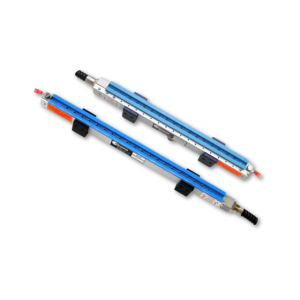
Antistatic bars for textile calenders are installed as close as possible to the areas where linen becomes electrically charged, typically:
-
at the exit of heated rollers
-
before folding sections
-
along linen guiding areas
Connected to a generator, they produce a flow of positive and negative ions that neutralizes static electricity on moving textiles.
This system operates continuously as linen passes through and helps to:
-
eliminate sticking between fabric pieces
-
improve textile separation
-
stabilize automatic folding
-
reduce dust attraction
-
enhance overall linen finishing quality
The bars are dimensioned according to the width of the calender and the configuration of the line to ensure uniform neutralization across the entire working width.
A System Tailored to Each Textile Calender Line
Every industrial laundry installation has its own characteristics: linen width, production speed, fabric type, and machine layout.
For this reason, the effectiveness of an antistatic system for textile calenders depends on precise positioning of the bars and correct generator sizing.
At Elcowa, we design and manufacture custom antistatic solutions for textile calenders, helping to sustainably reduce electrostatic charges, improve linen quality, and enhance the reliability of ironing and folding lines.
A Practical Lever for Linen Quality
Electrostatic charges on textile calenders are not inevitable. By installing antistatic bars with a generator, it is possible to effectively neutralize static electricity on linen, improve finishing quality, and ensure smooth operation of ironing and folding equipment.
Are you experiencing static electricity issues on your textile calender?
Elcowa’s teams can help analyze your installation and implement an antistatic solution tailored to your linen processing line.


